


When an iPhone stops responding after a drop, a failed update, water exposure or a charging fault, the real concern is rarely the handset itself. It is the photos, messages, notes, contacts and app data that may no longer be accessible. That is where professional data recovery services for iPhone become relevant - not as a generic repair job, but as specialist work focused on retrieving data from a device that may be damaged, locked up or no longer booting.
For many people, the first instinct is to try every home fix available. Charge it again, force restart it, connect it to a computer, run an update, restore from recovery mode, or install another utility that claims to bring everything back. Sometimes that works. Often, it makes the recovery path narrower. With iPhones in particular, storage encryption, hardware pairing, board-level faults and failed system states can quickly turn a simple issue into a high-risk one if the wrong step is taken too early.
When professional data recovery services for iPhone make sense
Not every data loss case needs specialist intervention. If the phone is working normally and files were recently deleted, there may be a straightforward software path through backups, cloud sync, recently deleted folders or app-specific recovery options. But when the device is physically damaged, stuck in a boot loop, not detected by a computer, showing no signs of life, or repeatedly asking for a restore, the situation changes.
In those cases, the goal is no longer convenience. It is controlled extraction under the right technical conditions. A professional service assesses whether the issue sits with the logic board, storage access, power delivery, screen output, charging circuit, liquid damage, system corruption or another fault that prevents access to the data. That distinction matters because data recovery is not the same as standard phone repair. A repair shop may focus on making the handset usable again. A recovery specialist focuses on preserving and extracting the data first.
That difference is especially important where the phone contains irreplaceable family photos, legal communications, business records, client contacts or project files. If the data matters more than the device, recovery strategy should reflect that from the start.
Why iPhone recovery is more complex than many users expect
Modern iPhones are designed with strong security and tightly integrated hardware. That is good news for privacy. It also means data recovery can be technically demanding.
Apple uses hardware-based encryption, and access to stored data is closely tied to the device’s internal components and security architecture. In practical terms, you generally cannot just remove a storage chip and read it elsewhere as you might have done with older devices or some simpler storage media. If the logic board has faults, the recovery process may involve stabilising or repairing specific circuits so the original device can boot far enough to authenticate and decrypt the data.
There is also the issue of software state. An iPhone that appears dead may still have intact data, while an iPhone that boots but insists on being restored may be at greater risk of data loss if handled incorrectly. Some faults are electrical. Others are file system related. Others are caused by failed updates, liquid ingress, impact damage or charging damage that gradually affects board behaviour.
This is why experienced assessment matters. The same symptom - such as an Apple logo loop or black screen - can have very different causes and very different recovery prospects.
What professional iPhone data recovery usually involves
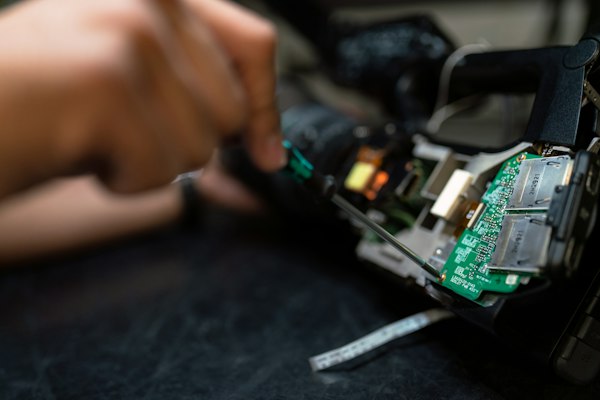
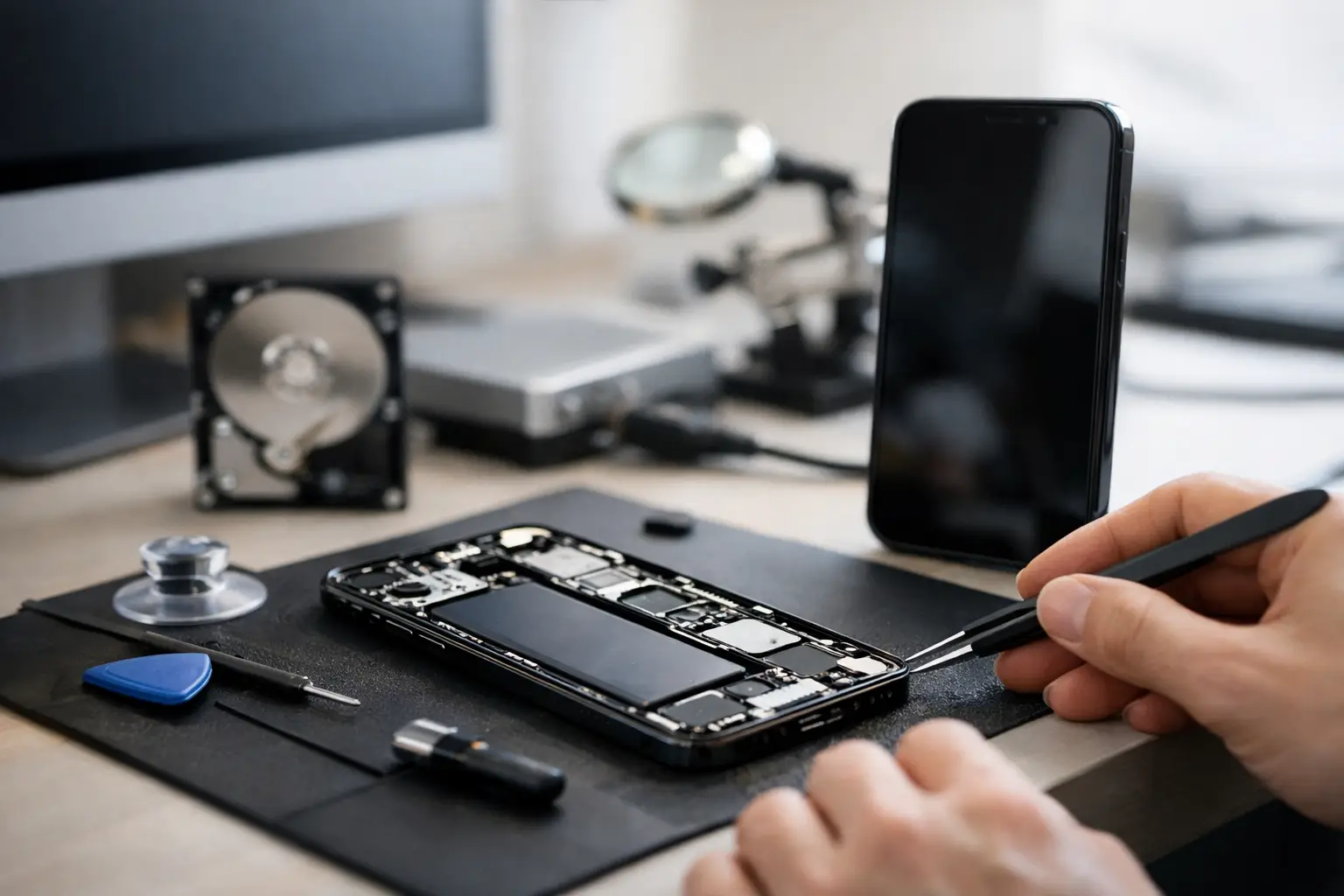
A proper service starts with diagnosis, not guesses. The phone is examined for external damage, liquid exposure, charge behaviour, computer detection, current draw and system response. Depending on the fault, technicians may perform board-level testing, inspect damaged components, evaluate whether the device can be safely powered, and determine whether a temporary repair path can be used to access the data.
Where the issue is software corruption, the work may centre on preserving existing data while attempting non-destructive access methods. Where the issue is hardware failure, the process may involve microsoldering, component replacement or logic board stabilisation to restore enough functionality for extraction. The aim is not always to return the phone to long-term working order. In many cases, the device only needs to be brought to a recoverable state once.
This is an important trade-off to understand. Data recovery work is often targeted, controlled and purpose-built. It is not the same as a full refurbish. A phone recovered for data may still need replacement afterwards, and that is entirely normal.
Common situations that lead to iPhone data recovery
The most common cases tend to follow a few familiar patterns. A phone is dropped and the screen stays black, but the owner is not sure whether the issue is only display-related or something deeper. A device suffers water exposure and works briefly before failing days later. An update or reset process gets interrupted and the phone becomes inaccessible. The handset charges inconsistently, drains rapidly, overheats, or stops being recognised by a computer. In business settings, a mobile used for two-factor authentication, client messaging or field documentation can suddenly become a single point of failure.
There are also cases where the device itself is less damaged than the access path. The screen may be unusable, touch input may fail, or the phone may remain locked with critical data still inside. If enough of the underlying hardware is intact, specialist work can sometimes create a path to secure extraction even when normal use is no longer possible.
What matters most is avoiding extra damage after the initial event. Repeated charging attempts after liquid exposure, improvised heating or drying methods, and forced restore attempts can all reduce recovery chances.
Choosing professional data recovery services for iPhone
If you are comparing providers, look beyond general phone repair claims. iPhone recovery requires a service that understands encrypted mobile storage, board-level diagnostics and data-first handling. Ask whether the provider deals specifically with Apple devices, whether they handle physical and logical failures, and whether the work is aimed at retrieval rather than routine handset repair.
Privacy should also be treated seriously. Phones often contain banking apps, personal messages, health information, work email and customer records. A credible service should have clear handling processes, secure data transfer methods and a professional approach to confidentiality.
Turnaround matters too, but speed should not be the only factor. Urgent cases can often be prioritised, especially where the device contains business-critical data, but rushed work without proper diagnostics can be counterproductive. The better question is whether the service can explain the likely issue, the proposed recovery path and any risks before work proceeds.
For Canberra customers and those elsewhere in Australia, working with a specialist provider can make a real difference when the device fault is outside the scope of standard retail repair.
What to do before you hand over the phone
Keep the device powered off if it has suffered liquid damage, impact damage with instability, or unexplained electrical behaviour. Do not attempt a factory reset. Do not approve a restore prompt in iTunes or Finder if the data has not been backed up elsewhere. If the phone is still partially functional, note the passcode, Apple ID details and any recent events that led to failure, because that context can help direct diagnosis.
It also helps to be clear about what data matters most. In some cases, the priority is the entire device image. In others, it is family photos, voice notes, business contacts or application-specific documents. A specialist can often plan more effectively when the recovery objective is defined early.
At RecoveryGeeks, that practical, device-specific approach is central to how serious data loss cases are handled.
The real value of specialist recovery
An iPhone can be replaced in a day. The data on it often cannot. That is why professional recovery exists as a separate discipline from everyday repair. It combines diagnostics, controlled technical intervention and careful data handling to give damaged or inaccessible devices the best realistic chance of yielding what matters.
If your iPhone has stopped cooperating and the data is too important to risk, the smartest next step is usually the calm one - stop experimenting, preserve the device’s current state, and get it assessed by people who treat recovery as the main job, not a side service.